Some of the most expensive water in your house is water you never see. It escapes from a pipe leak under a concrete slab and soaks into the soil and the floor above, day and night, while everything looks normal.
If your Charleston or North Charleston home sits on a slab foundation, that is the risk of a slab leak. The good news: professional slab leak detection Charleston SC teams can find the problem without tearing up every floor. The key is catching it early.
1. What a Slab Leak Is, and Why It Happens Here
A slab leak is a water line leak beneath or through a home’s concrete foundation. Many Lowcountry homes are built slab-on-grade, and in older homes those supply lines are often copper.
Those pipes don’t stay perfectly still. Hot water lines expand and contract every time they heat up and cool down, and damp coastal soil around Charleston can shift and settle under a house.
The Copper Development Association notes that sleeves or wraps are required where copper passes through concrete so the pipe can move with temperature changes without abrading against the slab. In older homes — or where that protection wasn’t installed well — years of movement, rubbing, and age can wear a pipe until it fails.
Local humidity and soil moisture don’t help: once a leak starts, materials under the floor stay wet longer than they would in a drier climate. If you’ve owned your home for a while, professional slab leak detection Charleston SC services are the fastest way to know whether this is happening under your floors.
2. 7 Warning Signs of a Leak Under Your Slab
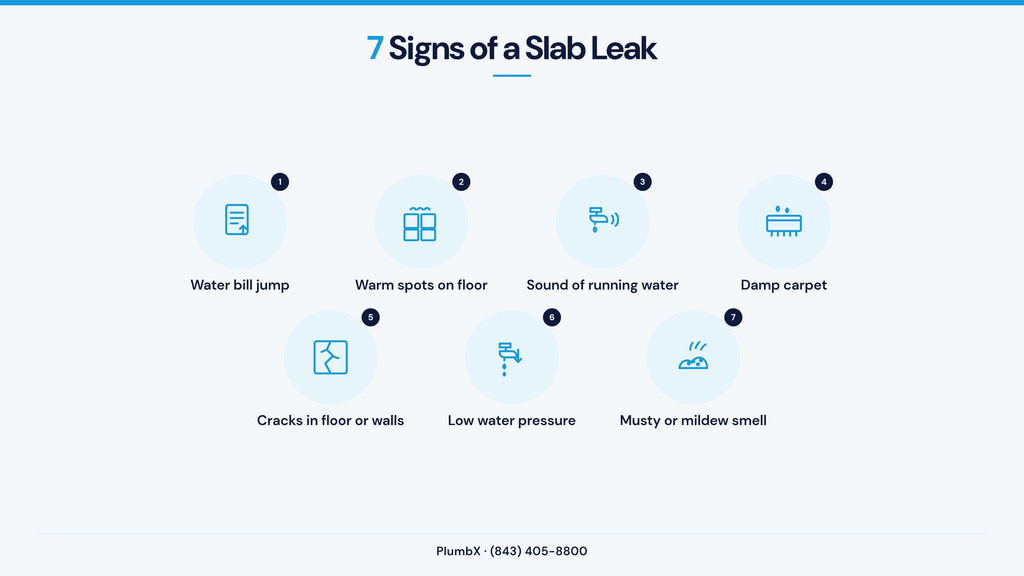
A water leak under floor finishes in Charleston rarely shows up as a neat puddle. Watch for these slab leak signs residential homeowners often miss:
- A water bill that jumps with no change in how your household uses water.
- Warm spots on the floor — often a sign that a hot water line is leaking under tile or wood.
- The sound of running water when every faucet, toilet, and appliance is off.
- Damp carpet, or flooring that feels soft, cups, or lifts.
- New cracks in tile, flooring, baseboards, or walls.
- Low water pressure at fixtures that used to run strong.
- A musty or mildew smell with no obvious source.
Before you call for slab leak detection Charleston SC homeowners can do one simple test first. You can run a quick check yourself. EPA WaterSense suggests reading your water meter before and after a two-hour stretch when no water is being used; if the reading moves at all, you likely have a leak.
3. The Risks of Ignoring It
Water and money down the drain. According to EPA WaterSense, the average household’s leaks can waste more than 9,300 gallons of water a year, and nine percent of homes have leaks that waste 50 gallons or more every day. A pressurized line under a slab doesn’t rest at night. It runs around the clock until it’s repaired.
Mold. Water trapped under flooring and behind baseboards doesn’t dry out on its own. The EPA advises drying water-damaged areas and materials within 24 to 48 hours to prevent mold growth. That’s impossible while a hidden leak keeps feeding moisture into the floor — and Charleston humidity only makes it worse.
Damage that keeps spreading. Flooring, cabinets, drywall, and baseboards absorb water first. Water constantly running into the soil under a slab can also contribute to settling and cracking over time.
Bigger insurance claims. The Insurance Information Institute reports that water damage and freezing averaged about 1.5 claims per 100 insured homes per year from 2019 to 2023 — roughly one claim for every 67 homes — with an average claim of $15,400. Every day a hidden leak keeps running adds to the final bill. The sooner you schedule slab leak detection Charleston SC, the smaller the repair usually is.
Hearing water when everything’s off? Call (843) 405-8800.
4. Slab Leak Detection Charleston SC: How We Find Leaks Without Tearing Up Floors
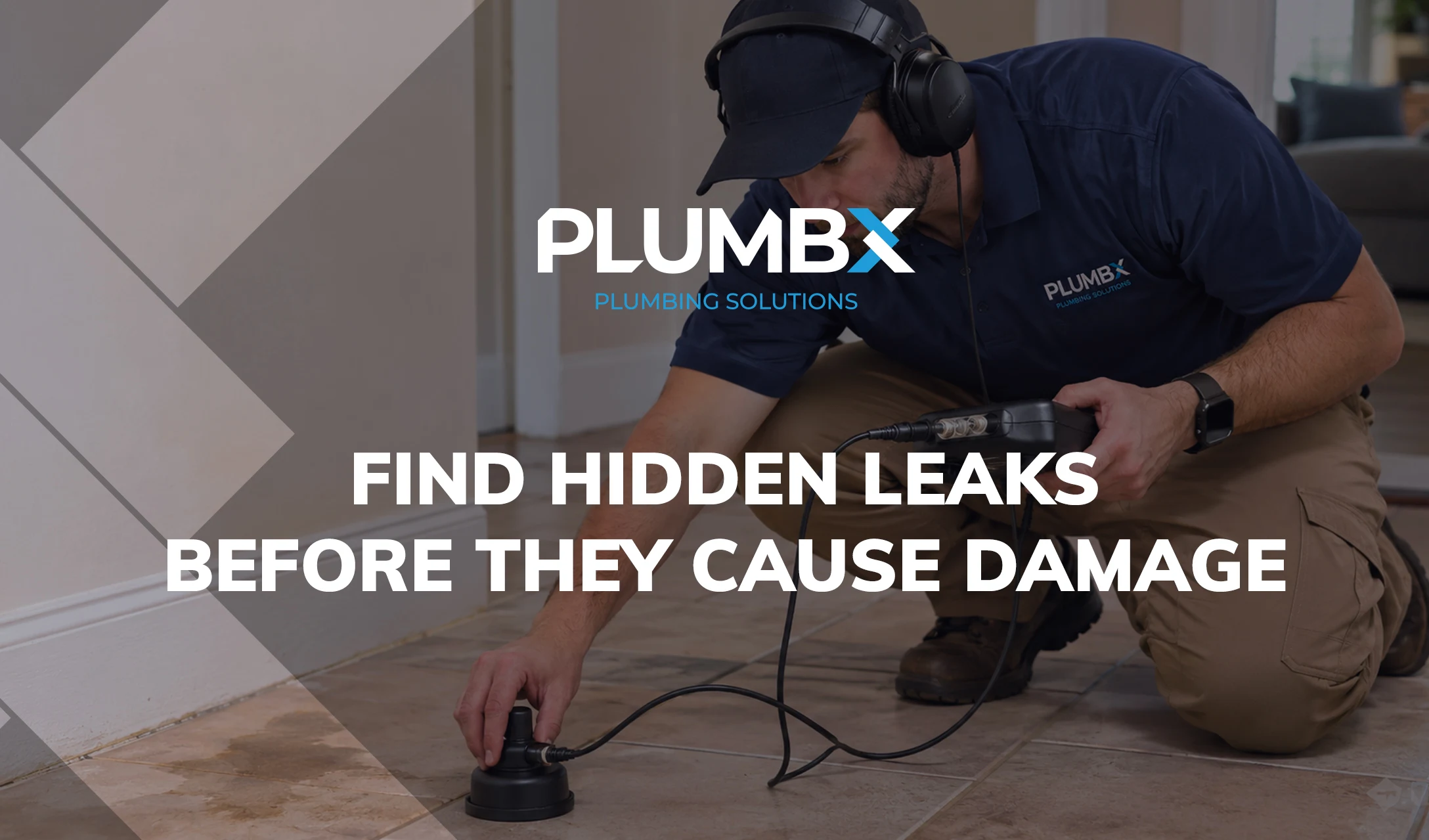
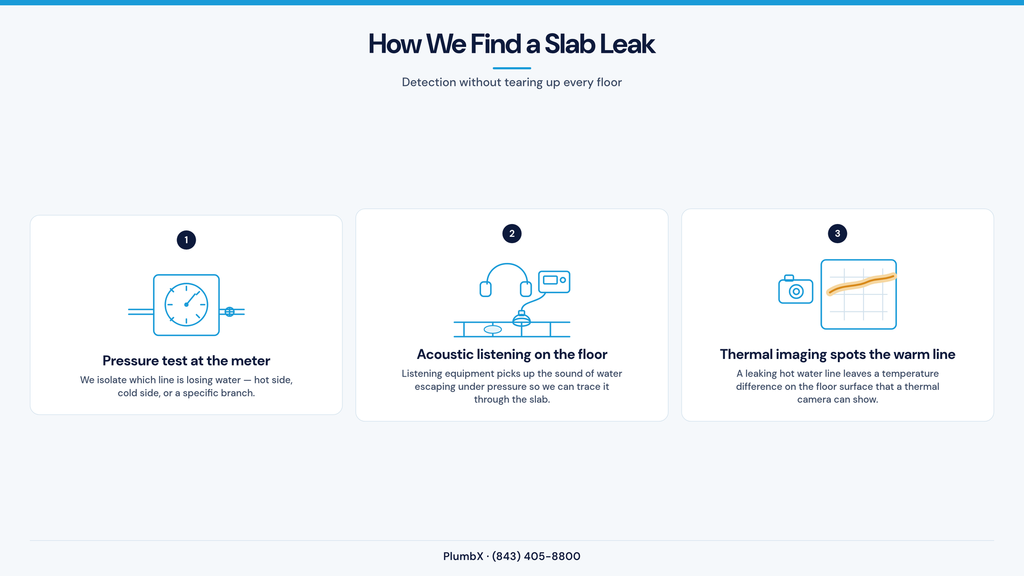
Finding a leak under several inches of concrete used to mean breaking up floor until someone hit wet soil. Today, PlumbX uses electronic leak detection and other non-invasive tools to pinpoint the leak first:
- Pressure testing isolates which line is losing water — hot side, cold side, or a specific branch.
- Acoustic listening equipment picks up the sound of water escaping under pressure so a technician can trace it through the slab.
- Thermal imaging shows the temperature difference a leaking hot water line leaves on the floor surface.
That’s how slab leak detection Charleston SC works at PlumbX: find the leak first, open the floor second. Used together, these methods narrow a pipe leak under concrete slab to a small area, so any access opening is small and in the right spot. Learn more about our slab leak detection and repair and residential leak detection services.
5. Repair Options: Spot Repair, Re-Route, or Lining
Whether you’re downtown, in Mount Pleasant, or need slab leak repair North Charleston, the right fix depends on where the leak is, the condition of the pipe, and whether this is the first leak or one of several.
Spot repair. A small opening is cut through the slab directly over the leak, the damaged section is replaced, and the concrete and floor are patched. It makes sense for a single leak in otherwise healthy pipe.
Re-route. Instead of repairing the line under the slab, a new line is run through the walls or attic and the old section is abandoned. For older pipe or repeat leaks, this is often the better long-term answer because it takes the line out from under the concrete for good. See our repiping options.
Pipe lining. In some cases, the existing pipe can be cleaned and sealed from the inside with an epoxy liner, with little or no cutting through the slab. Whether it’s a fit depends on the pipe’s material, size, and condition — confirm suitability on a case-by-case diagnosis. Learn more about pipe relining.
Before any work starts, our technicians walk you through each option and its tradeoffs.
6. Cost Factors and Insurance
Every slab leak is different, so we don’t quote a price without a diagnosis. The biggest cost factors are:
- Where the leak is, how deep it sits, and what flooring is on top of it
- The repair method: spot repair, re-route, or lining
- The age and material of the pipe, and whether there’s more than one leak
- How much water damage needs to be repaired
Insurance is the other big variable, and coverage varies by policy and insurer. Some policies help with the cost of reaching the leak and repairing resulting water damage but not the pipe itself, and damage from a slow leak that was left alone may be excluded. Call your agent early and ask exactly what your policy covers. A written diagnosis from a licensed plumber helps either way. A slab leak detection Charleston SC visit also gives you the written findings your insurer may ask for.
Don’t Let Hidden Water Do Hidden Damage
A slab leak doesn’t get cheaper with time. Every day it runs adds to your water bill, the moisture under your floors, and the size of the eventual repair. Slab leak detection Charleston SC from PlumbX pinpoints the problem first, so the fix is targeted and done right.
Want to catch problems before they reach your floors? A plumbing system inspection is a good place to start. If water is already showing up where it shouldn’t, our emergency plumbing team is available 24/7.
Suspect a slab leak? Call PlumbX for a diagnosis.
Call PlumbX at 843-405-8800 or contact us online to get started.
Email: workorders@plumbx.com