
Client: College of Charleston
Location: Charleston, SC
Year Completed: 2026
Services: CIPP sewer relining, GPR scanning, CCTV inspection (pre & post), high-pressure jetting, mechanical milling, bypass pumping, concrete cutting & restoration, robotic service connection reinstatement
Pipe relined: 215+ LF (eastern hallway sewer main) + 26 LF discovered 5″ line
Lifespan: 50-year service life (ASTM F1216), 10-year manufacturer’s warranty
Client Type: Higher Education / Residential Housing
Challenge
Solution
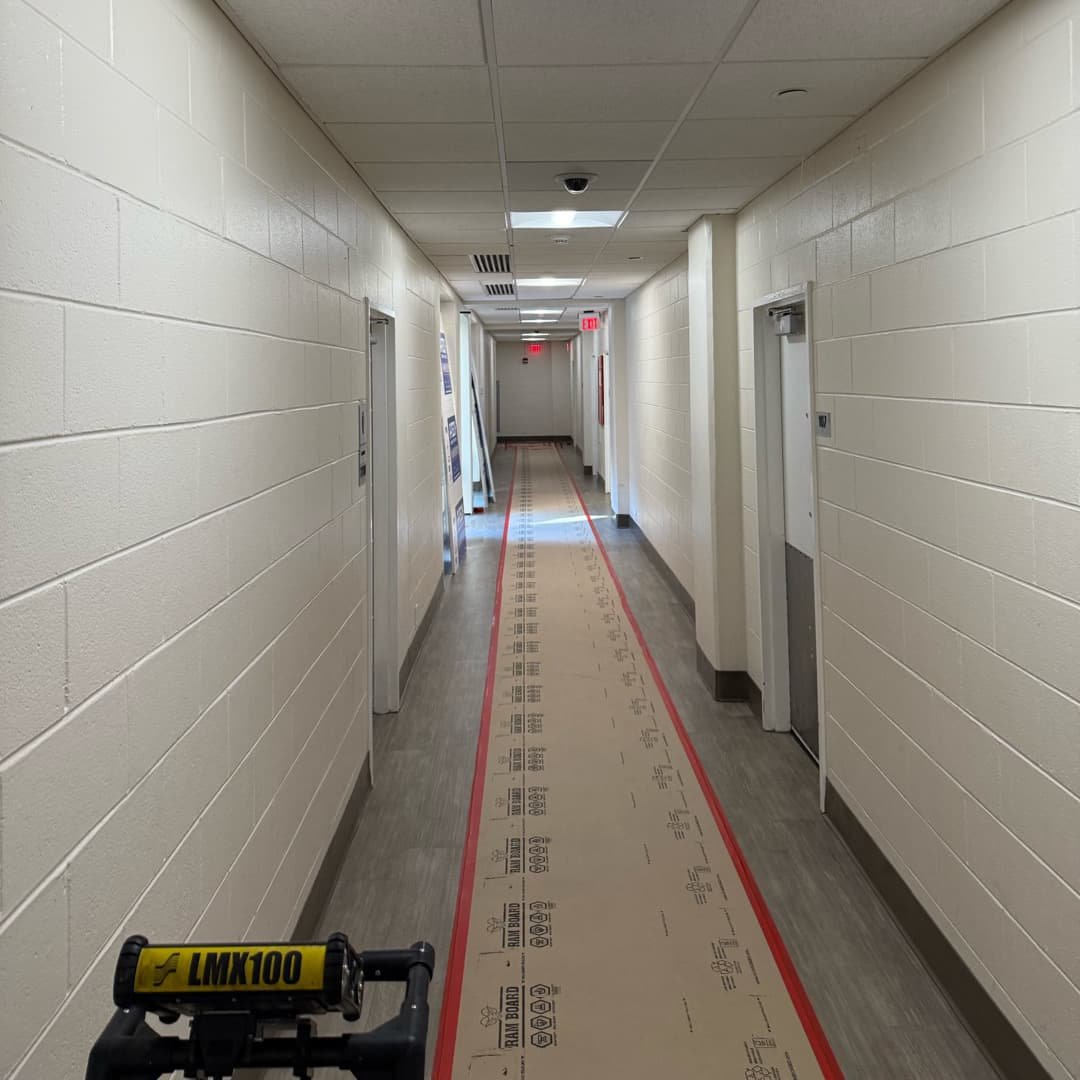
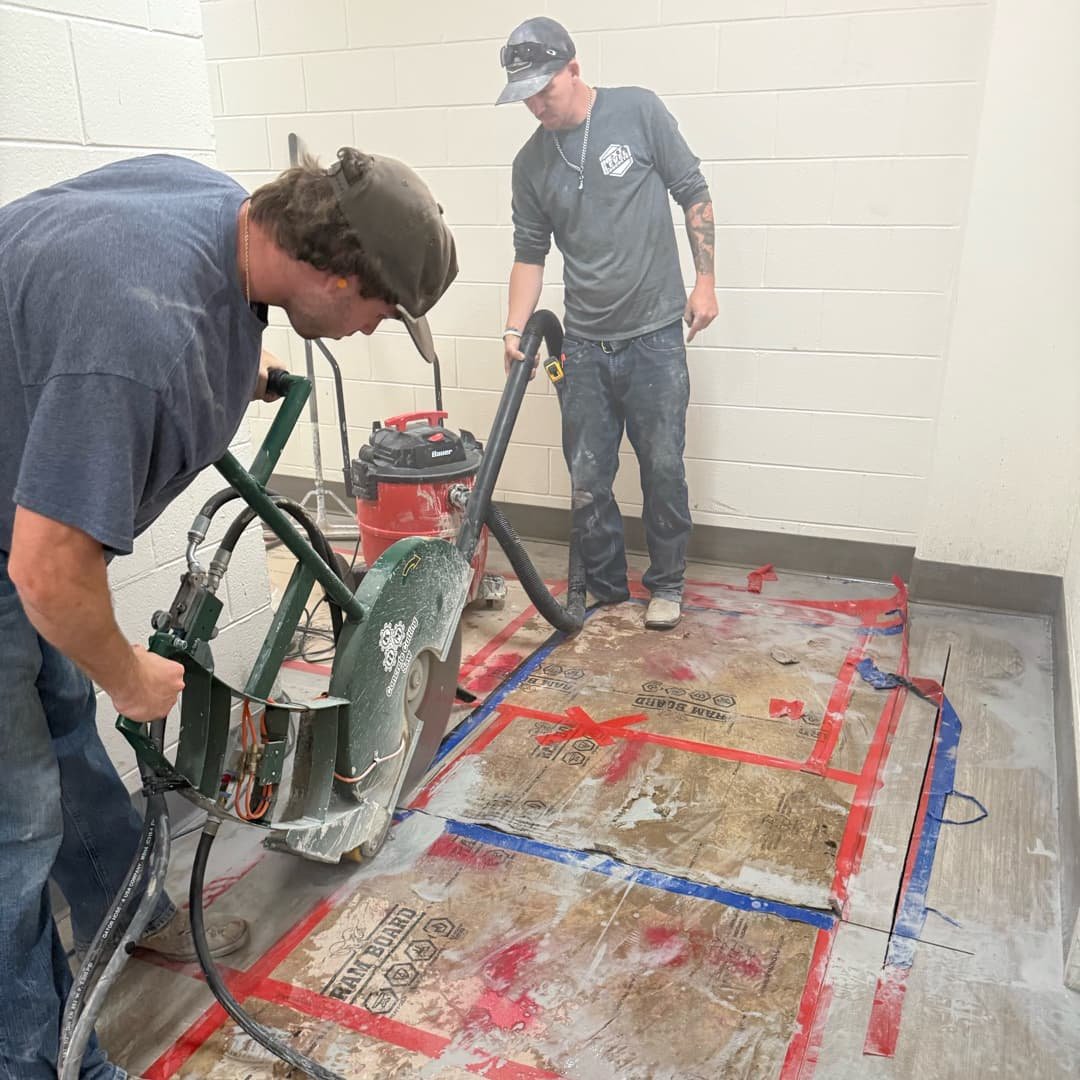
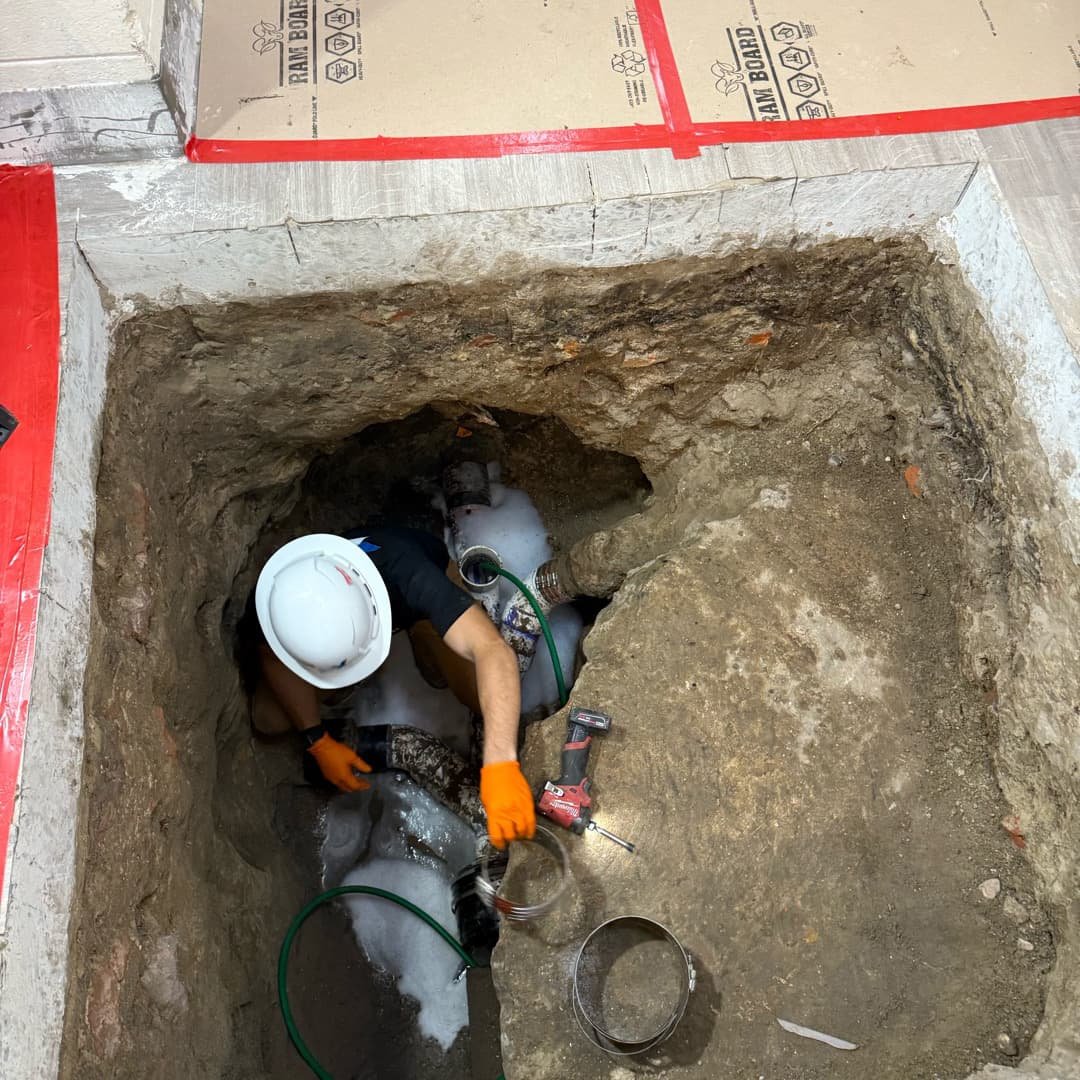
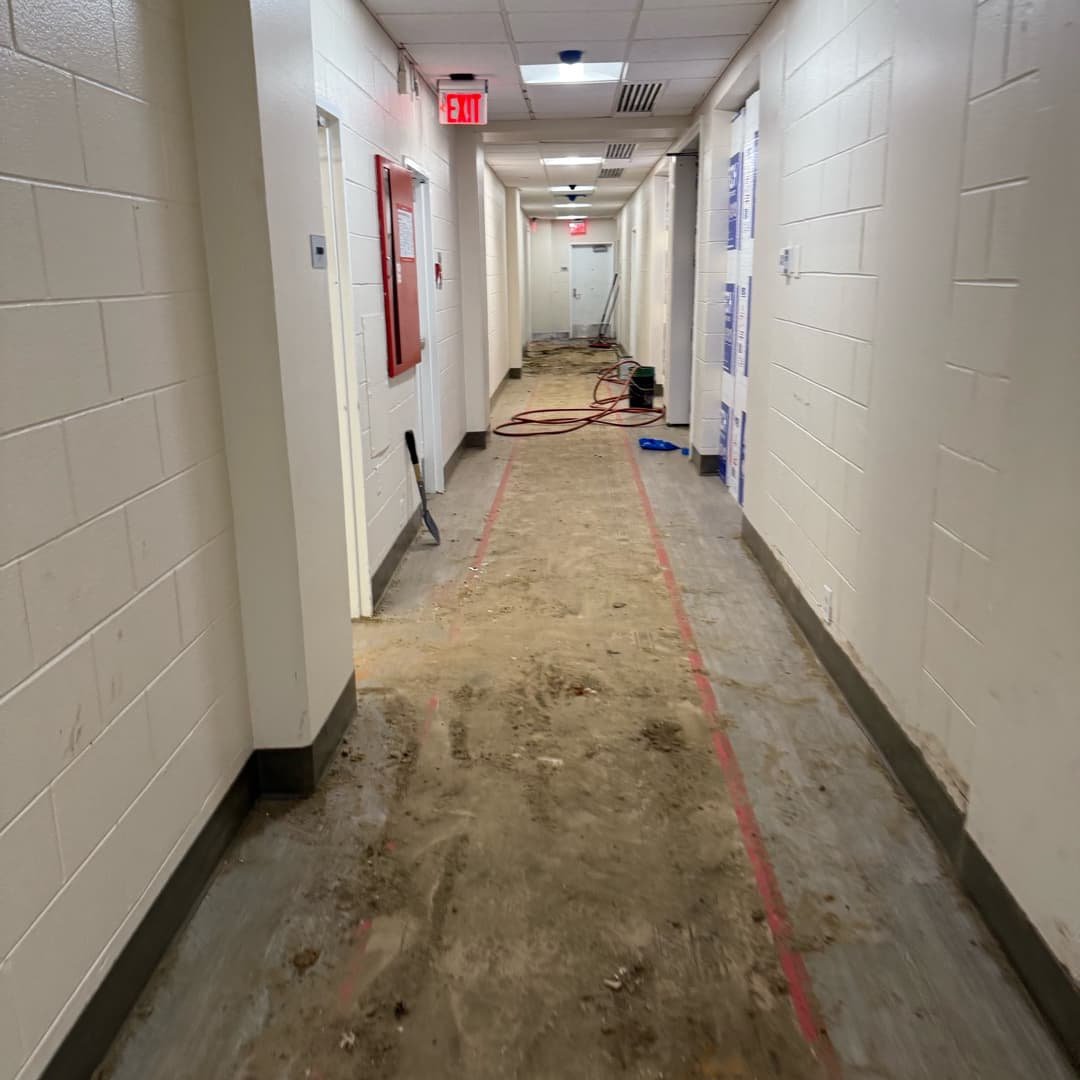
PlumbX scheduled Phase 2 for the summer break window (May 4–15, 2026) to work in an unoccupied building. Pre-construction preparation included a detailed site survey in early March, full first-floor protection installed by Rumsey Restoration, and Ground Penetrating Radar (GPR) scanning of all proposed concrete cutting locations to identify embedded utilities and electrical conduits before any cuts were made. Where electrical conflicts were found, lines were rerouted through the ceiling plenum to maintain uninterrupted power.
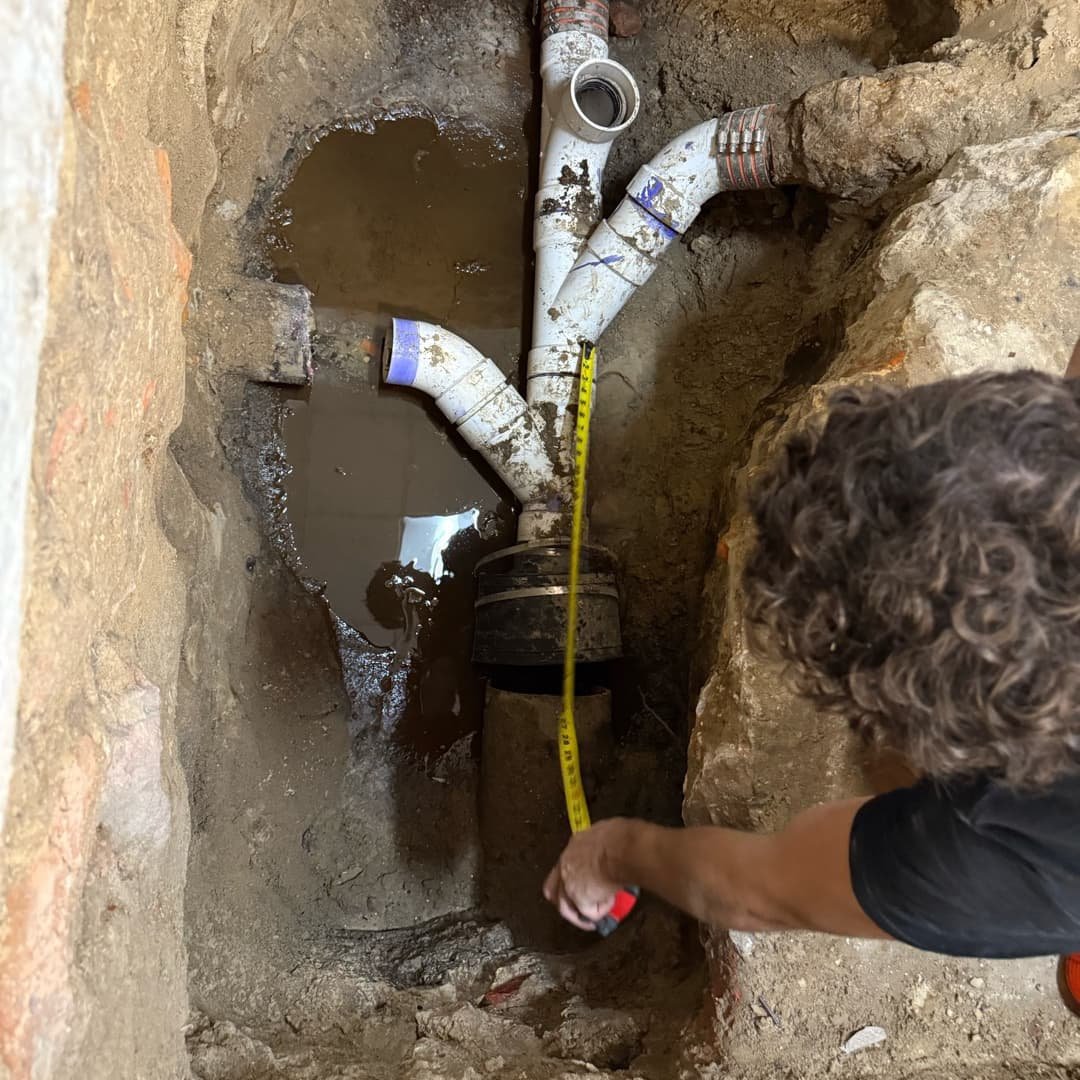
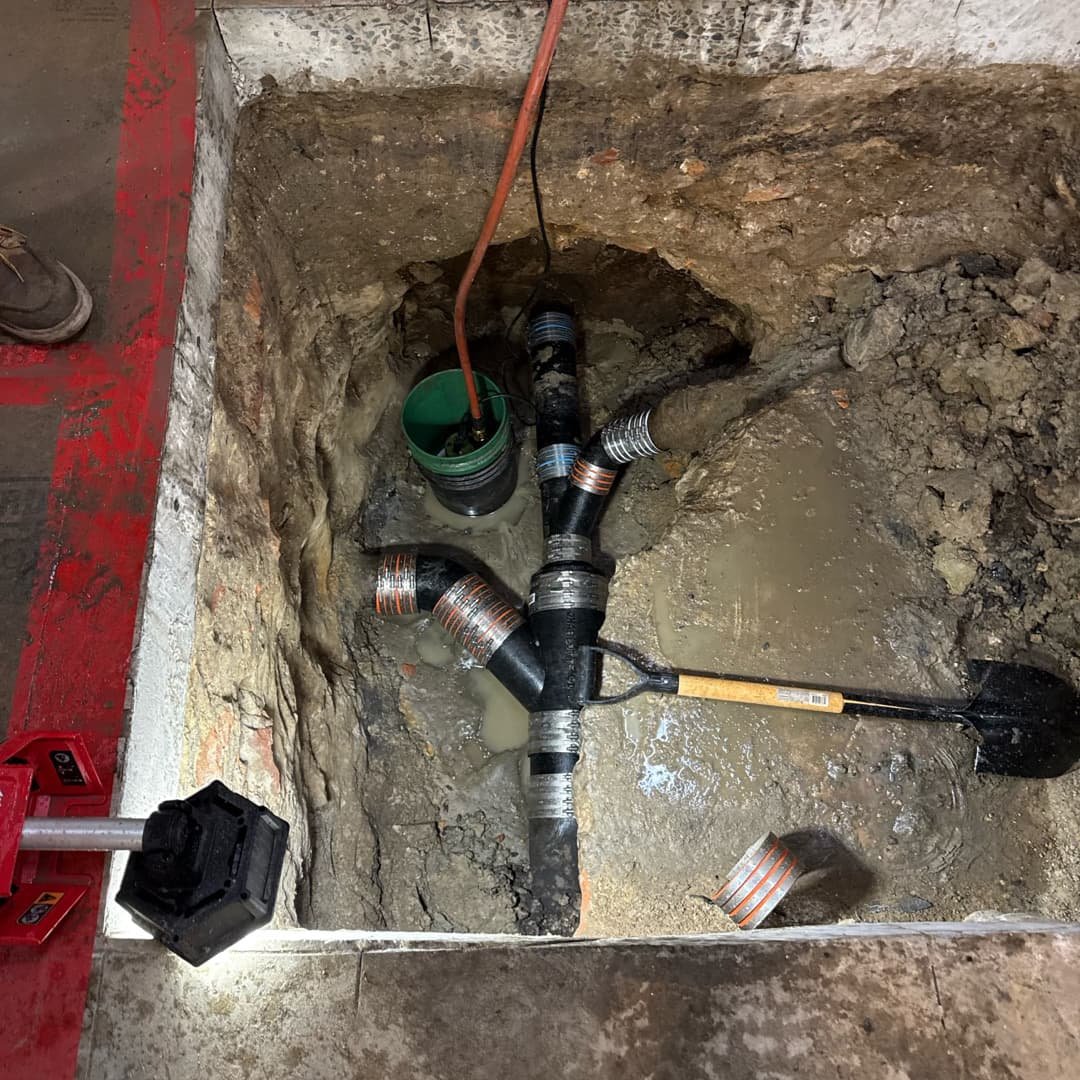
During excavation, the team encountered two significant discoveries not reflected in existing plans: outside Room 108, what was assumed to be a 5-inch exit line to the exterior manhole turned out to be an 8-inch cast iron pipe requiring different materials and specialized equipment; outside Room 106, an entirely unmapped 5-inch sewer line serving the second floor was uncovered, hidden because it takes a sharp turn connecting to a 4-inch line with no surface indication. Both were addressed transparently — PlumbX issued documented change orders for each, hydro-jetted and lined the 26-foot discovered section, and performed all required reinstatements.
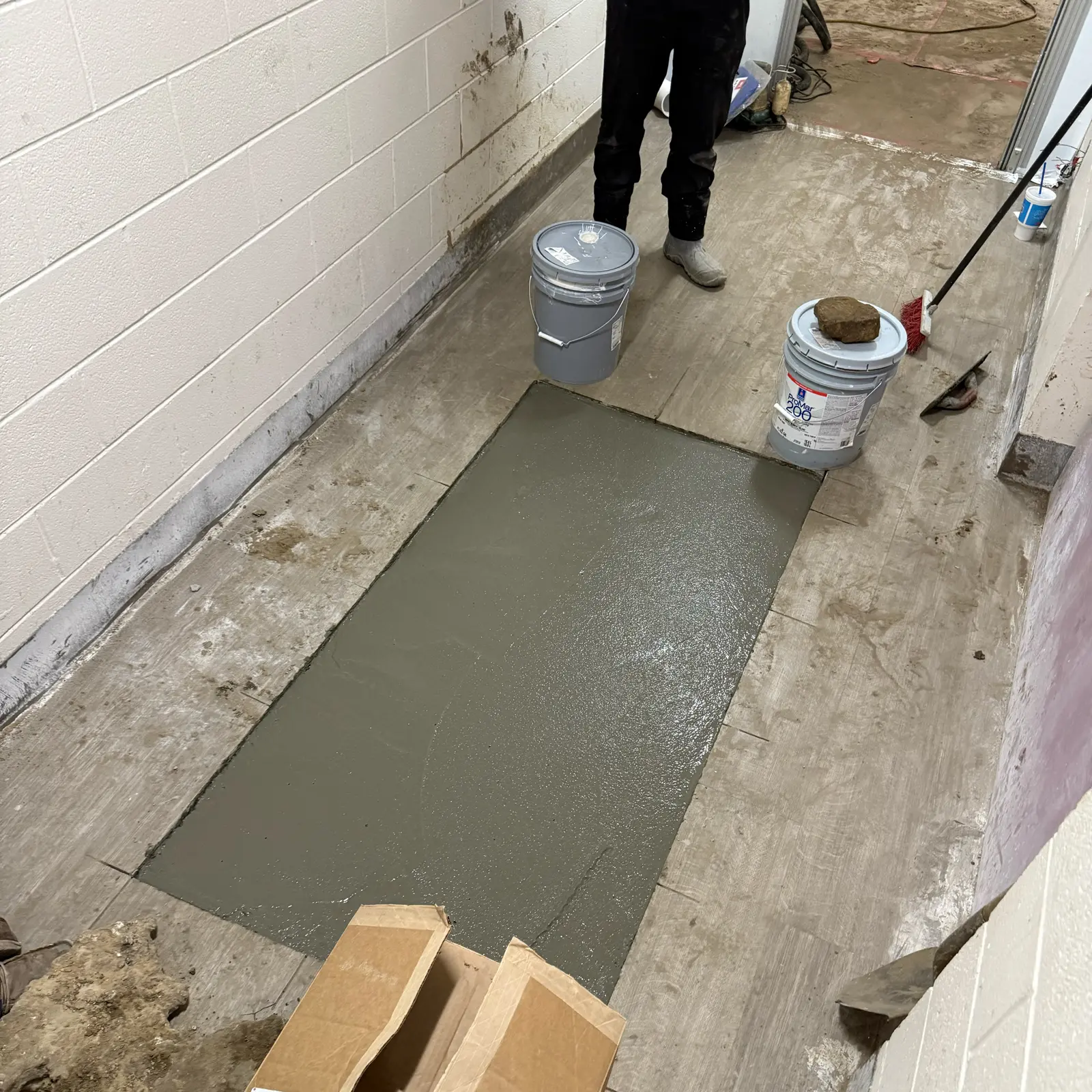
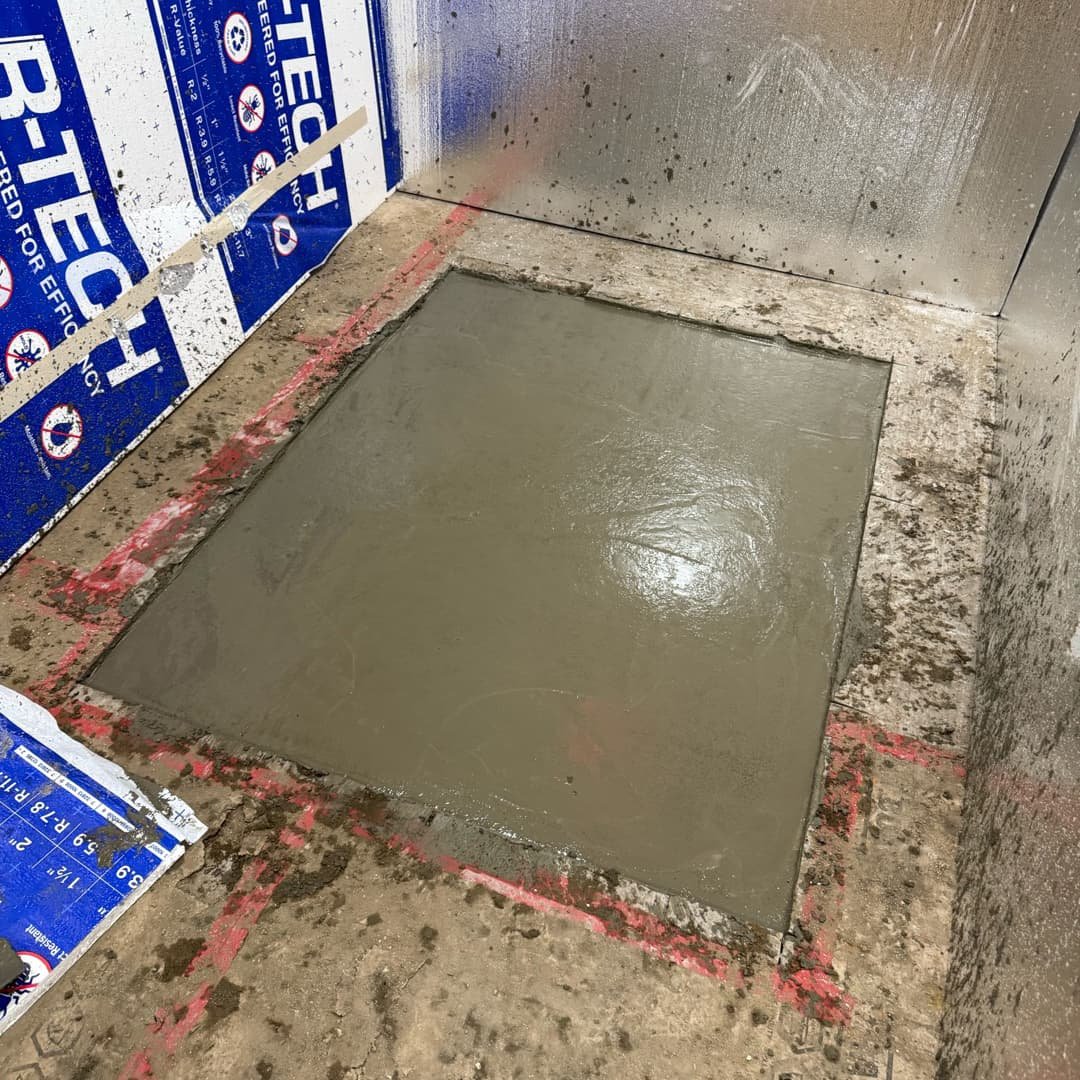
The CIPP liner was installed using UV-cured fiberglass technology, creating a seamless pipe-within-a-pipe from each access point to the exterior manhole. Pre-lining CCTV inspection confirmed pipe condition and identified all service connections; post-lining CCTV verified installation integrity. Robotic cutting equipment reopened all service connections after curing. Concrete was poured back per College facility standards and the complete sewer network map — including completed work, upcoming scope, and cleanout locations — was delivered to the College for recordkeeping.